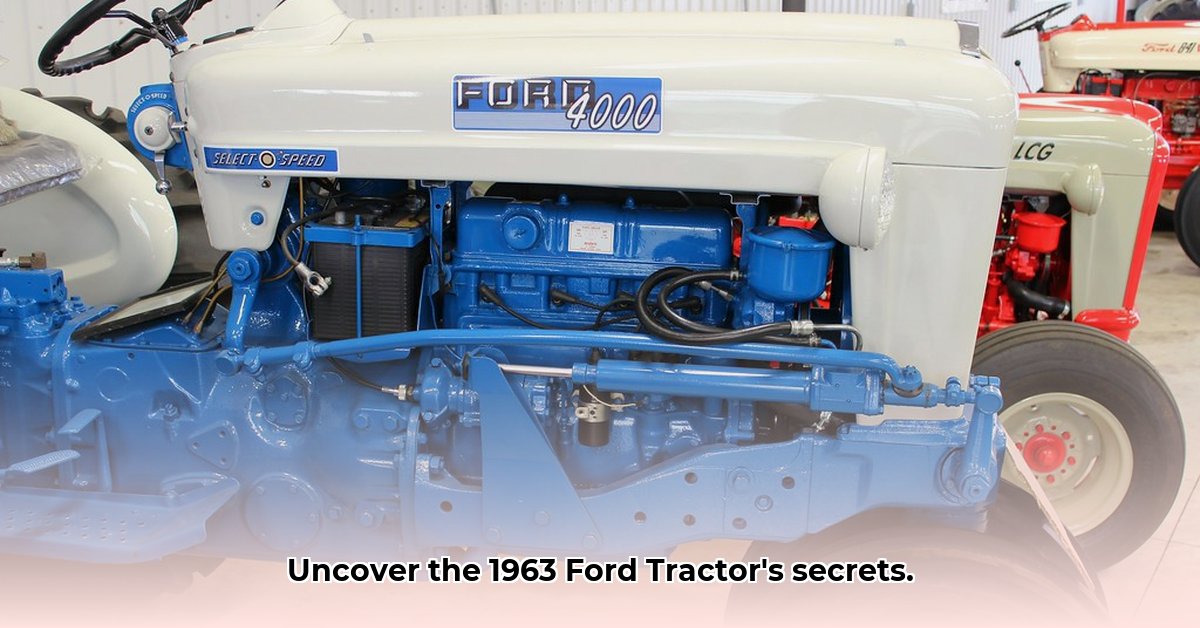
The 1963 Ford 4000 tractor—a name synonymous with dependability and agricultural progress—remains a beloved machine for enthusiasts and farmers alike. This comprehensive guide delves into its history, technical specifications, and the rewarding process of restoration. Whether you're a seasoned mechanic or simply captivated by vintage machinery, prepare to discover the enduring legacy of this iconic workhorse. For more on Ford tractors, check out this helpful resource.
A Legacy Forged in the Fields: The 1963 Ford 4000's Rise
The Ford 4000, produced between 1962 and 1975, wasn't merely a tractor; it represented a significant leap forward in agricultural technology. Its robust build, versatile features, and available options made it a mainstay on farms across the nation. But what exactly set it apart from its competitors? Let's explore the factors that cemented its place in agricultural history.
More Than Horsepower: Engine Variety and its Impact
The heart of the 1963 Ford 4000 beat with a powerful 2.8-liter four-cylinder engine, but the choice didn't end there. Ford offered gasoline, diesel, and even liquid propane (LP) gas options—a remarkable degree of flexibility for the time. This adaptability allowed farmers to choose the fuel type best suited to their needs (availability, cost), significantly affecting the tractor's operating expenses and performance.
Smooth Operations: Transmission Choices and Their Significance
The 1963 Ford 4000 offered a range of transmission options, evolving from a simple 4-speed to more advanced 10 and 12-speed configurations across its production run. This upgrade represented a crucial step toward improved efficiency and refined control, especially critical for various farming tasks. More gears translated directly to better speed management, leading to increased precision in fieldwork. Did you know that the availability of these different transmissions was a major selling point for the Ford 4000?
Connecting Power and Implements: The Three-Point Hitch and PTO
The tractor's robust Category II/I three-point hitch system and live, independent power take-off (PTO) facilitated seamless attachment and operation of a wide variety of implements—a keystone of increased mechanization in agriculture during that era. This allowed for efficient use of tools like hay balers, plows, and cultivators, streamlining farm operations.
A Day's Work: Operational Capabilities and Applications
The Ford 4000 was a true all-rounder. From plowing fields and planting crops to harvesting and hauling heavy loads, its versatility contributed significantly to its popularity. It wasn't just a tractor; it was a vital tool for countless farmers, enabling the efficient and effective execution of a wide range of agricultural tasks. Think of all the hands it replaced—a testament to its ability to mechanize traditionally labor-intensive work.
Restoring a Piece of History: A Practical Guide to Ford 4000 Restoration
Restoring a 1963 Ford 4000 is a rewarding undertaking that combines mechanical prowess with a deep appreciation for agricultural heritage. This detailed guide will help you navigate the process, turning a weathered machine into a functional and visually stunning piece of history.
Assessment and Planning: Begin with a thorough inspection, meticulously documenting areas requiring repair or replacement. Photography and detailed notes are crucial.
Parts Acquisition: Locating parts for a vintage tractor can be challenging. Utilize online forums, specialized parts dealers, and salvage yards, remembering that patience is key to sourcing the necessary components. These parts will be fundamental for returning to factory condition and maintaining the tractor's integrity.
Mechanical Restoration: Engine rebuilds, transmission overhauls, and hydraulic system repairs often necessitate the expertise of a skilled mechanic. While DIY is possible, it’s advisable to seek professional assistance unless you possess extensive mechanical knowledge.
Cosmetic Restoration: Repainting, replacing worn parts, and thorough cleaning transform the tractor's appearance dramatically. Consider preserving some original wear (patina) for character.
Decoding the Details: Technical Specifications and Variations
Precise specifications vary by model year and configuration. This table provides general parameters:
| Feature | Specification | Notes |
|---|---|---|
| Engine | 2.8L Four-Cylinder (Gas, Diesel, LP Gas) | Horsepower varies significantly based on fuel and model. |
| Transmission | 4-speed, 5-speed, 10-speed, 12-speed | Specific transmission details require further research. |
| Weight | Approximately 3165-3505 lbs (1436-1614 kg) | Weight fluctuates based on configuration and added implements. |
| Fuel Tank Capacity | Approximately 17 US Gallons (64 liters) | Capacity may vary slightly depending on the model. |
| Three-Point Hitch | Category II/I |
The Enduring Legacy: The Ford 4000's Impact on Agriculture
The Ford 4000, and its later variants, left an undeniable mark on agriculture. It symbolizes not just technical innovation but the enduring spirit of farm work and innovation that continues to shape modern farming practices, making itself a key player and influencing the way agriculture is executed in the modern era.
Identifying Ford 4000 Generations: A Guide to Engine and Transmission Variations
Differentiating between the generations of Ford 4000 tractors requires a careful examination of the engine and transmission, as precise identification via simple serial numbers isn't always straightforward.
Unlocking the Clues: Engine and Transmission Codes
Casting numbers on the engine block and transmission often reveal manufacturing details or design iterations. Online forums and communities dedicated to Ford tractors are invaluable resources for deciphering these codes. Differences in horsepower and fuel type (gasoline vs. diesel) also provide significant clues.
Visual Inspection: Bodywork and Design Elements
While less reliable due to potential modifications, visual differences in bodywork (hood, fenders, seat design) can provide additional hints when used in conjunction with engine and transmission data.
Key Considerations:
- Discrepancies between engine and transmission codes may indicate post-manufacturing repairs or replacements.
- Thorough documentation (photos and notes) is paramount throughout the identification process.
- Online communities provide invaluable support in deciphering codes and component identification.
The 1963 Ford 4000 tractor stands as a testament to enduring engineering, agricultural innovation, and the enduring spirit of hard work. By understanding its history, specifications, and restoration, we honor its legacy and appreciate its significant contributions to agricultural history.